Been There Got Out High-Conflict Divorce, Custody, and Co-Parenting Strategists
Been There Got Out
When Your Ex Turns the Kids Against You, the book by Lisa Johnson and Chris Barry

You're Not Imagining It.
And You're Not Alone.

The experts inside the book & the resources to take action, organized for you, chapter by chapter.

Don’t have the book yet? Get it now on Amazon:

Amazon #1 New ReleaseParental & Juvenile Family Law
Amazon Best SellerDivorce & Separation Family Law

Everything the book points to, in one place

The book names dozens of experts and resources. Here they all are, grouped by chapter, so you can go as deep as you need on exactly what you're facing right now.

Chapter 1: Alienation vs. Estrangement

When your child pulls away, it’s natural to wonder whether you caused it. Sorting that out starts by telling estrangement, where a child withdraws for reasons of their own, from alienation, where they’ve been turned against you. The two can look identical from the outside while calling for opposite responses. Dr. Josh Coleman explains why a child can reject a parent who did nothing wrong; attorney Billie Tarascio walks through what alienation looks like once it lands in a custody case.

Reconnecting After Estrangement — Dr. Josh Coleman

Confronting Parental Alienation — Billie Tarascio

Questions to ask yourself

  • Looking at the criteria for distinguishing alienation from estrangement, what evidence do you have that your child's rejection is being imposed by your ex rather than stemming organically from your relationship? (Consider the frequency of negative messages, whether they are directed only at you, and whether your child's responses match their developmental stage).
  • Before your separation, what was the quality of your relationship with your child? (Think about moments which highlight your relationship, involvement, and positive interactions that demonstrate this rejection represents a significant change from the way things were before things soured with your ex).
  • Which of the six alienation factors (poisonous messages, interfering with contact, erasing/replacing, encouraging betrayal, undermining authority, fostering dependence) do you recognize in your situation? Choose the most prominent one and identify three specific examples that demonstrate this pattern of behavior.

Chapter 2: The Impact of Alienation

When you’re the one being pushed out, it’s natural to focus on what you’re losing. This chapter turns to what your child is losing: the loyalty binds, the guilt, the confusion that can follow them for years. Seeing that clearly steadies you for what’s ahead, and it changes how you show up for your kid now. David Marcus and child specialists Dr. Barb and Dr. Wayne get into how kids absorb the conflict around them, and what it does to them over time.

Overcoming Parental Alienation: Healing & Reconnection I

Overcoming Parental Alienation: Healing & Reconnection II

Shielding Young Hearts — David Marcus

Guiding Children Through Divorce — Dr. Barb & Dr. Wayne

Questions to ask yourself

  • What do you appreciate about your child, and how do you show your appreciation? When's the last time you showed it?
  • What can you do to show consideration towards your child? (Is it taking them out to dinner at their favorite restaurant? A small gift? Taking a little more time to listen?) How have you been considerate to your kid in the past two weeks?
  • How can you acknowledge your child's stress? (Saying something like, I know you're working hard right now. What can I do to help you? Not making them do chores for a day because you recognize that they have exams?)

Chapter 3: A Distorted View of Reality: Why They Do It

It’s hard to respond well to behavior that makes no sense to you. These resources get into why your ex acts the way they do, and what’s driving it underneath, so their next move stops blindsiding you. George K. Simon, who has spent a career studying manipulative people, and Chelsey Brooke Cole break down the patterns. Understanding them doesn’t excuse anything; it just lets you plan around it.

Unmasking the Manipulator — Dr. George Simon

Getting the Narcissist's Voice Out of Your Head — Chelsey Brooke Cole

Questions to ask yourself

  • Which of the five triggers (separation, court events, money, your relationship with your child, your new relationship) seems to most consistently set off increased alienating behavior from your ex?
  • Thinking about your ex's core motivations (need for control, fear of being replaced, sense of entitlement), which seems to drive their behavior most?
  • How might understanding this help you respond more strategically?

Chapter 4: How It Begins: Pre-Alienation and Poisonous Messages

Looking back, a lot of parents can see the groundwork that was laid long before the real trouble started. This chapter names the early tactics: the poisonous messages, and the slow work of making you the problem in your child’s eyes. Dr. Kristin Roorbach explains why choosing your child’s side is the right move even when it costs you, and Marnie Grundman gets into why kids stop talking to the parent who’s trying to reach them.

Why Kids Won't Talk — Marnie Grundman

Questions to ask yourself

  • Looking back at your relationship before separation, what examples of "pre-alienation" behavior can you now identify? Think about times your ex undermined your authority, made you the "butt of jokes," or sent subtle messages that you were the problem parent.
  • Which specific poisonous messages is your ex sending about you being unsafe, unloving, and/or unavailable?
  • How has "hatred by association" affected your child's relationships with your family members, friends, or new partner?

Chapter 5: The Tentacles of Poison

The poison rarely stays in one place. It spreads into your extended family, your child’s school, sometimes the court itself, often carried by allegations that sound convincing. Attorney Charles Jamieson explains how a coached child’s memory can be rewritten until they believe the story themselves, and Tracy Malone gets into how smears and false claims take on a life of their own.

A Coached Child's Memory — Charles Jamieson

Lies, Smear Campaigns & False Allegations — Tracy Malone

Questions to ask yourself

  • How has your co-parent displayed these behaviors?
  • Encourage your child to believe you're mentally unfit, unpredictable, and possibly dangerous.
  • Make your child discard or replace things you've given them, including school supplies, clothing, and holiday gifts. This may also extend to presents from your extended family.
  • Make your child feel guilty for demonstrating any affection toward you or anyone associated with you.
  • Reject, shame, or punish your child emotionally for expressing positive feelings towards you.
  • Make insulting comments about you in front of or directly to your child.

Chapter 6: Oh. My. God. (What Can I Do?)

The moment it fully sinks in, most parents want to do something, anything, right now. This chapter is about doing the right things instead of the instinctive ones. Dr. Mark Singer lays out the interventions that actually interrupt alienation, and Ginger Gentile, whose documentary Erasing Family you can watch below, makes the case for becoming the parent your child wants to come back to rather than the one chasing them.

Breaking the Chains of Parental Alienation — Dr. Mark Singer

Reversing Parental Alienation — Ginger Gentile

Questions to ask yourself

  • Of the three main "problems to solve" we discussed in Chapter 1 (getting the best co-parenting arrangement, insulating yourself against false claims, and protecting your relationship with your children), which feels most urgent in your situation right now and why?
  • What violations of your parenting plan or concerning behaviors have you been "letting slide" that you now realize need immediate attention?

Chapter 7: Getting Yourself Right

Before you can steady your child, you have to steady yourself. It feels backwards to work on you when the emergency is out there, but your kid reads your state before they hear your words. Dr. Jill Leibowitz explains why a child won’t feel safe with a parent who can’t self-regulate, and Anthony Johnson talks through managing the guilt and the boundaries so you can keep going.

Protecting Your Child's Mental Health — Dr. Jill Leibowitz

Managing Guilt, Boundaries & Growth — Anthony Johnson

Questions to ask yourself

  • Consider public settings like your child's school events or activities. Are you avoiding these situations out of fear, or showing up but letting your ex's presence intimidate you?
  • Using the UPS framework, practice introducing yourself to a new professional in your child's life. How would you present the situation with your ex in a way that sounds mature and reasonable while preparing them for what you imagine your ex will throw their way? Write out your specific script and practice it.
  • Looking at the eight guidelines for checking yourself (remembering good qualities about your ex, apologizing for mistakes, not supporting only negative comments, etc.), which area do you most need to work on?

Chapter 8: Gearing Up for the Legal Battle

If you’re heading into court, a lot of the outcome is shaped by preparation you do long before the hearing. This chapter is about building the record: careful documentation, the right evidence, framed the way a judge can actually use. Kara Bellew walks through how to manage a high-conflict case so it doesn’t manage you, and Dennis Vetrano gets into documenting and communicating so your case holds up.

Managing Your High-Conflict Case — Kara Bellew

Documentation & Communication — Dennis Vetrano

Questions to ask yourself

  • Consider Dr. Amy Baker's Five-Factor Model. For each factor (how your child avoids you, your prior positive relationship, absence of abuse/neglect on your part, your ex's alienating behaviors, and your child's behavioral manifestations), what specific evidence do you currently have, and what additional documentation might you need to gather?
  • If you had to present your case to a judge tomorrow, what would be your three strongest pieces of evidence that alienating behavior is occurring?
  • What would be your specific request for relief and how might it help?

Chapter 9: Building Your Team

You can’t do this one alone, and the people you choose matter as much as the strategy. This chapter is about assembling the team: the lawyer who understands alienation, the evaluator who can see it, the professionals who make your case credible. Dr. Liz Stilwell explains how a collaborative custody evaluation works, and attorney Jude Egan describes what a lawyer who genuinely gets these cases looks like.

The Collaborative Custody Evaluation — Dr. Liz Stilwell

Finding a Lawyer Who Gets It — Jude Egan

Questions to ask yourself

  • Looking at your current support network, who are your "positive advocates" versus "negative advocates"?
  • What changes could you make to surround yourself with more helpful influences?
  • Based on the questions provided for selecting evaluators and therapists, which professionals in your current team (if any) may not have the right expertise for your situation?
  • What might you be able to do to either change things or adapt your own behavior to make up for any shortcomings of your team?

Chapter 10: Nailing Your Presentation

Family court runs on impressions, and a traumatized parent often presents worse than the one causing the harm. This chapter is about showing up calm and credible when it counts. Ashish Joshi explains why custody cases become a battle of imagery, and Dr. Mark Singer walks through what evaluators are really looking for.

Litigating Parental Alienation — Ashish Joshi

Acing Your Custody Evaluation — Dr. Mark Singer

Questions to ask yourself

  • Thinking about Dr. Steven Miller's "Four C's" versus "Four A's," how do you typically present in stressful situations?
  • What specific strategies can you practice to appear calmer and more credible when it matters most?
  • Using the UPS framework, how would you introduce yourself - in your own words - to a new professional in your child's life (teacher, coach, therapist) to protect against potential negative influence from your ex?
  • What documentation do you currently have that shows your historical positive relationship with your child? What additional evidence could you gather to build credibility?

Chapter 11: Parenting Plans, Relief & Enforcement

A parenting plan is where good intentions become enforceable terms, or fall apart. This chapter is about getting the details right and holding the line when they’re broken. Attorneys Leona Krasner and Kevin Hoffkins break down what a high-conflict parenting plan needs to cover, and how to build in the enforcement that keeps small violations from becoming the new normal.

High-Conflict Parenting Plans — Leona Krasner

Crafting Comprehensive Parenting Plans — Kevin Hoffkins

Questions to ask yourself

  • What specific relief or remedies would be most helpful in your situation (makeup time, custody changes, therapy requirements, etc.)?
  • If you were to file for reunification therapy or an evaluation tomorrow, what would be your strongest argument for why this intervention is needed? What documentation could you use to support this request?

Chapter 12: Creating Stability for Your Kids

Whatever is happening in court, your child needs one place that feels steady, and that place is you. This chapter is about the ordinary things that hold a kid together: routine, ritual, and a parent who’s calm to be around. Dr. Gloria Vanderhorst, whose frameworks run through this book, explains how kids read your emotional weather, and Dawn Brauer gets into building the secure attachment that carries them through.

How Kids Read Your Emotional Weather — Dr. Gloria Vanderhorst

Forming Secure Attachments — Dawn Brauer

Questions to ask yourself

  • Looking at McCready's nine emotions (grief, guilt, shame, isolation, powerlessness, injustice, anger, anxiety, fear), which three affect you most strongly right now?
  • How might these emotions be influencing your interactions with your child?
  • What expectations about your relationship with your child or family life do you think need to be "realigned and reframed" to match your current reality?
  • What specific rituals or routines can you establish (or re-establish) during your time with your child? Think about simple, consistent activities that create good memories. Is there something you can do this week to begin a positive tradition?

Chapter 13: Understanding What's Going On Inside Them

When your child pushes you away, it’s easy to read defiance where there’s actually distress. This chapter is about getting underneath the behavior to what your kid is really telling you. Christopher Willard explains how to anchor a child’s emotions in the middle of chaos, and coach Mike Barsamian shares how to help them name what they feel before it comes out sideways.

Anchoring Your Child's Emotional Health — Christopher Willard

Help Kids Name What They Feel — Mike Barsamian

Inside Your Child's Experience of Court — Dr. Ben Garber

Questions to ask yourself

  • Think of a recent conflict you had with your child. Do you think your child was approaching you asking for help or instead expressing uncomfortable feelings?
  • How did you react or respond?
  • How did the way you deal with it affect your child?
  • How did you feel about the way you handled it? What, if anything, worked well?
  • What, if anything, would you do differently?

Chapter 14: When Anger Becomes Aggression

Sometimes the pushback runs hot: a child who lashes out, a handoff that turns into a scene. This chapter is about staying regulated when your kid, or your ex, is not. Alina Boie explains why a child starved for a sense of control will act out to get it, and Tosha Schore offers a way to meet that aggression without matching it.
Raising Strong Children — Alina Boie

Meeting a Child's Aggression — Tosha Schore

Questions to ask yourself

  • How did you imagine life would be with your child when you (or your ex) was pregnant?
  • List three things that you do well.
  • What are two things about yourself that you can improve or work on?
  • Could you have a conversation with your child about this topic and see what they agree or disagree with? (If you can do this, it might be an interesting opportunity to bond!)

Chapter 15: Dealing with the Ex

You’ll have to keep dealing with your ex, probably for years, and how you communicate can protect you or sink you. This chapter is about handling a high-conflict person without handing them ammunition. Bill Eddy teaches the assertive, low-reaction approach that defuses these exchanges, and Rebecca Zung gets into negotiating with someone who treats everything as a fight. This is the exact gap our Strategic Communication work is built to fill.


Mastering Assertive Communication — Bill Eddy

Negotiating With a High-Conflict Ex — Rebecca Zung

Questions to ask yourself

  • What influence might you have with your ex that you haven't fully considered? Think about what they care about most (reputation, public image, legal consequences, money, avoiding conflict with authorities), and how might you use this strategically?
  • Looking at your recent communications with your ex, which strategic communication mistakes have you been making? Are you using too many "I/you" statements, getting defensive, offering your own solutions instead of inviting theirs, or showing emotion? What specific changes will you make in your next interaction to build better documentation while potentially influencing their behavior?

Chapter 16: Staying Strong & Seeing It Through

This is the long game, and it asks you to keep going before there’s any sign it’s working. Kids do come back, and the parent who stays steady and keeps the door open is the one they can return to. Coach Karen McMahon helps you keep your own life moving while you wait, so you’re whole and ready when that day comes.

Get Your Ex's Voice Out of Your Head — Karen McMahon

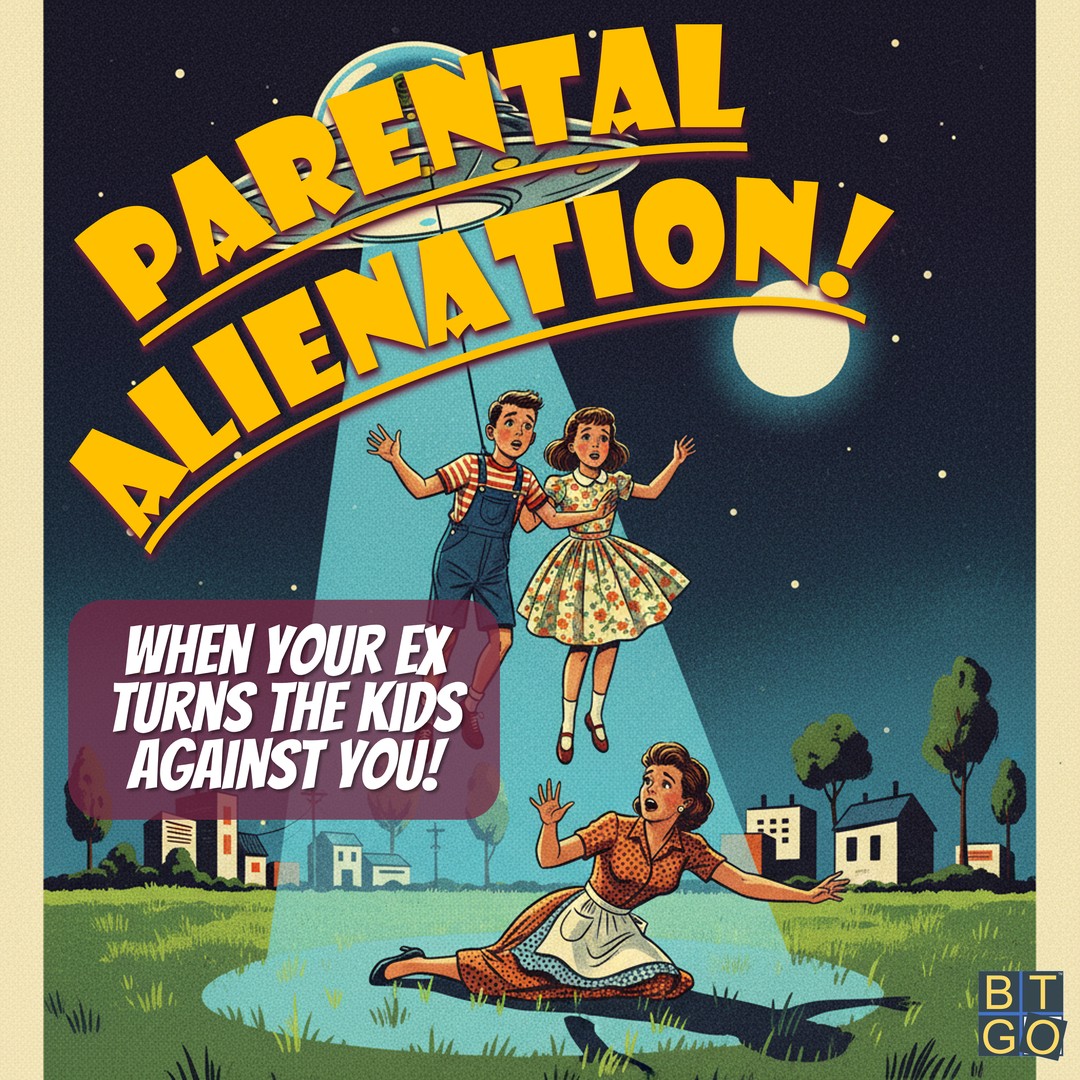
Parental Alienation: When Your Ex Turns the Kids Against You - retro sci-fi course poster of a UFO abducting two children as their mother reaches out

Be first in line for the Parental Alienation course

We're turning the strategy in this book into a step-by-step course. Add your name and you'll be the first to know the moment it opens.

Chris Barry and Lisa Johnson with author Dr. Jill Leibowitz at the Been There Got Out book launch in New York

At our New York book launch with author and child psychologist Dr. Jill Leibowitz (left). Jill interviewed us live that night, and we’ll add that conversation here soon.

New from Been There Got Out

Parental Alienation book
Parental Alienation Book

Now available

Been There Got Out: When Your Ex Turns the Kids Against You

If your children are being used as weapons — you’re not imagining it. This is your roadmap.